A Farmer Spotlight from The Food Group’s Farm Program
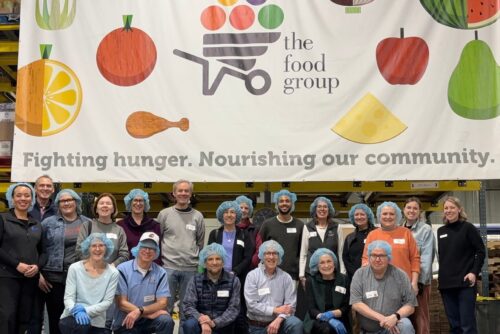
Every April, The Food Group gathers at our farm—Big River Farms—to offer gratitude and blessing to the land for the upcoming growing season. During this year’s ceremony, Lakota elder LeMoine LaPointe reminded us that a circle is complete, beautiful, and has no gaps. Earth Day recognizes this symbiotic relationship—the earth nurtures us and we, in turn, nurture the earth.
Earth Day encourages us to look beyond the present to our collective future. The Food Group is committed to creating food for today and change for tomorrow. We believe that sustainable farming practices and wise land stewardship will ignite lasting change in our food system for decades to come. This Earth Day, we’re sharing the powerful story of one of our sustainable farming partners at Big River Farms, BaoBai’s Harvest.
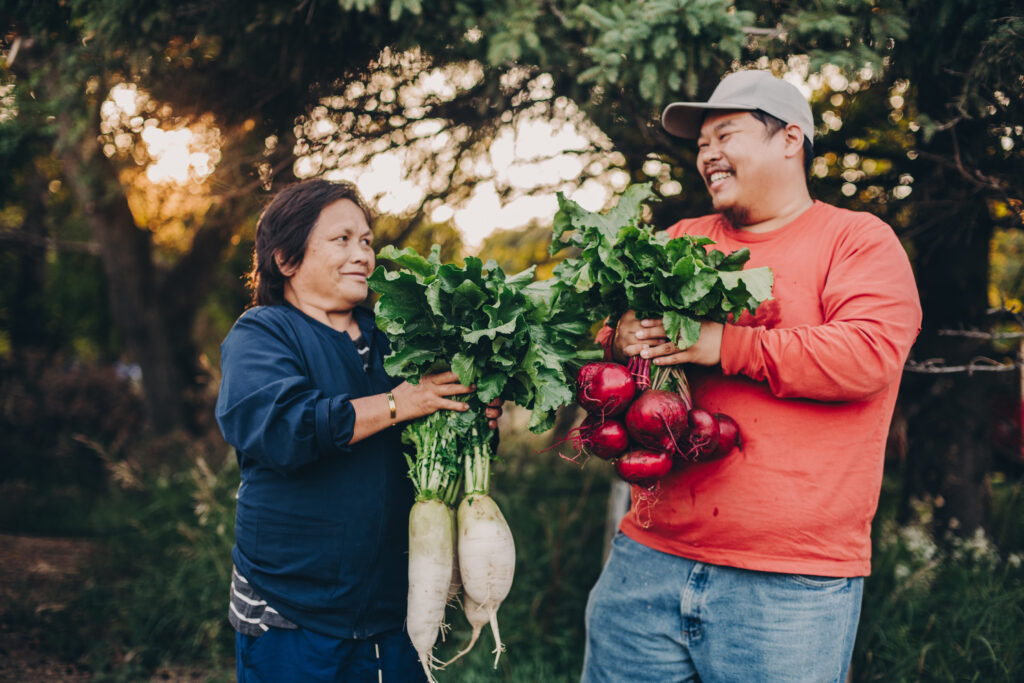
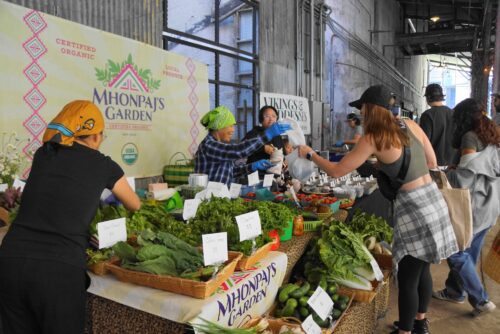
BaoBai’s Harvest is a mother-son sustainable and regenerative vegetable farm growing at Big River Farms. Bao was born in Laos and would often go with her parents as a child to their farm. She remembers watching them work in the fields and sampling refreshing fruits and vegetables. In her early teens, the Vietnam War forced Bao and her family to Thailand as refugees.
Living in a refugee camp, Bao’s family did not have access to farmland. But she recalls that her family still found ways to grow food:
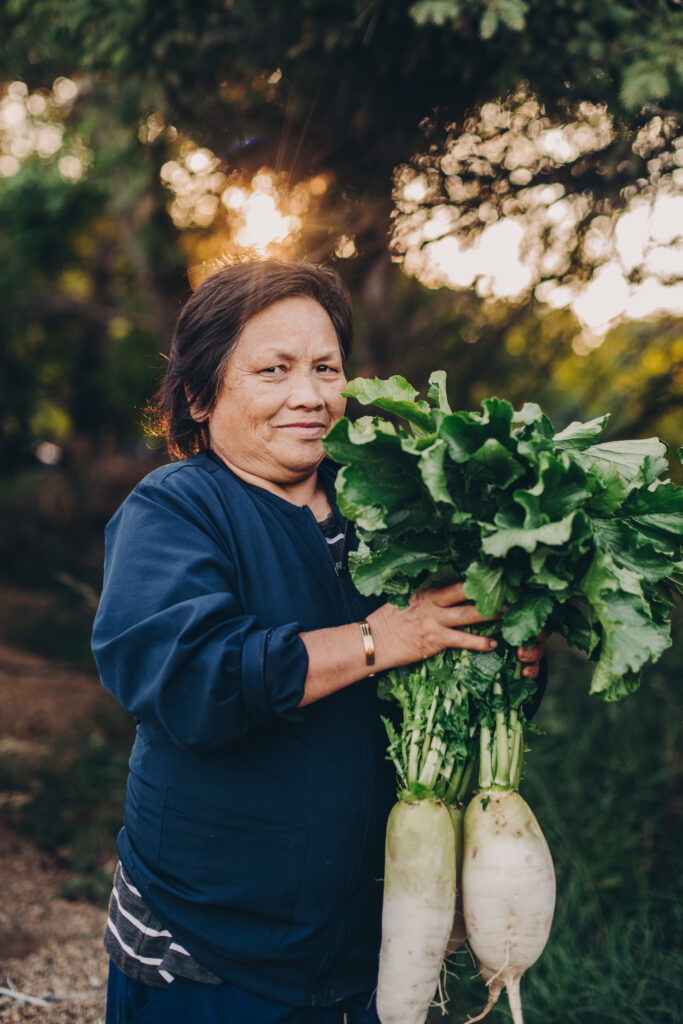
When Bao immigrated to the United States, she carried that experience and knowledge with her. She began planting in her backyard once again and before long had expanded into community gardening.
As the community garden grew in scope, new challenges arose. There was a need to communicate more in English and additional legal requirements like registering for plots for the garden. Bao’s son, Bai, joined her in the community garden at that time. Drawing on their complementary strengths, the mother-son duo embarked on a 15-year journey that would eventually lead them to expand their growing and create BaoBai’s Harvest.
Bai’s approach to growing is rooted in his background as a public health researcher. He’s passionate about “finding a way to not just eat and live better but to provide this for our larger community.” Bai describes his mother as a leader in growing food for BaoBai’s Harvest. Building on her practical expertise as “master gardener,” Bai brings critical “theory and vision for the future” to their business.
They shared big dreams of expanding their community garden but needed to learn more about the business side of farming. As a child, Bao gained business experience selling her family’s food in Thailand—but farming in the US brought fresh challenges in renting land, acquiring permits, documentation, and proactive planning. Luckily, these are some of the areas Bai shines.
When Bai and Bao started BaoBai’’s Harvest, they knew they wanted to be an organic farm because it aligned with their core values. Bai described the organic symbol as “a way to communicate to people that the food that we’re growing is grown a certain way.” Organic farming is not just about making money. Bai commented:
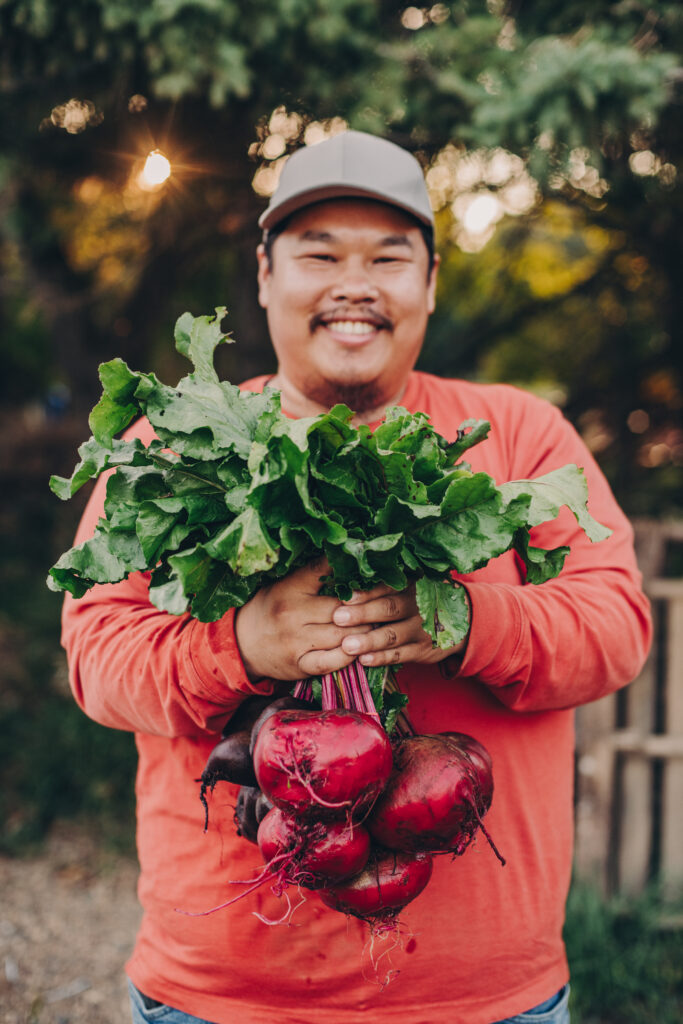
Bai also stressed that the land is resilient and finds ways to regenerate, but human beings may not. For that reason, he explained, we need to think about our mutual relationship with the land.
For Bao, organic farming flows from her belief that health comes first:
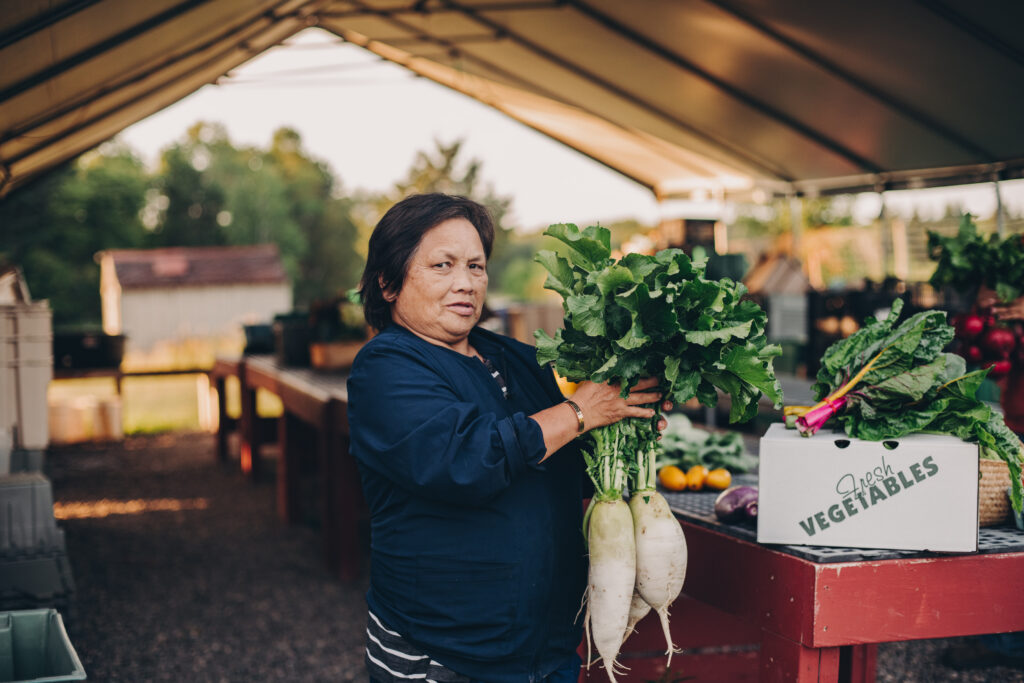
Bai and Bao were excited to join Big River Farms because “there are systems in place to provide [organic] certification.” Bai explained that land access through The Food Group’s Incubator Training Program expedited their ability to become a certified organic farm. The Incubator Training Program supports emerging farmers by providing affordable land access, farm infrastructure, business development, and training resources.
Without the program, Bao and Bai would have had to purchase land and wait for it to be certified. Instead, they followed the system in place at Big River Farms, closely documenting seed origins and farming practices to meet state standards. Today, BaoBai’s Harvest is a fully certified organic farm!
Bao and Bai are united in their passion for caring for the earth and it’s evident in their chosen name—BaoBai’s Harvest. In Hmong, “BaoBai” means butterfly. The butterfly is deeply embedded in the Hmong culture. Bai explained “Butterflies, similar to dragonflies, fireflies, bees, and those other relatives that we share the earth with, are indicators of fertility and the land doing well, the environment doing well.”
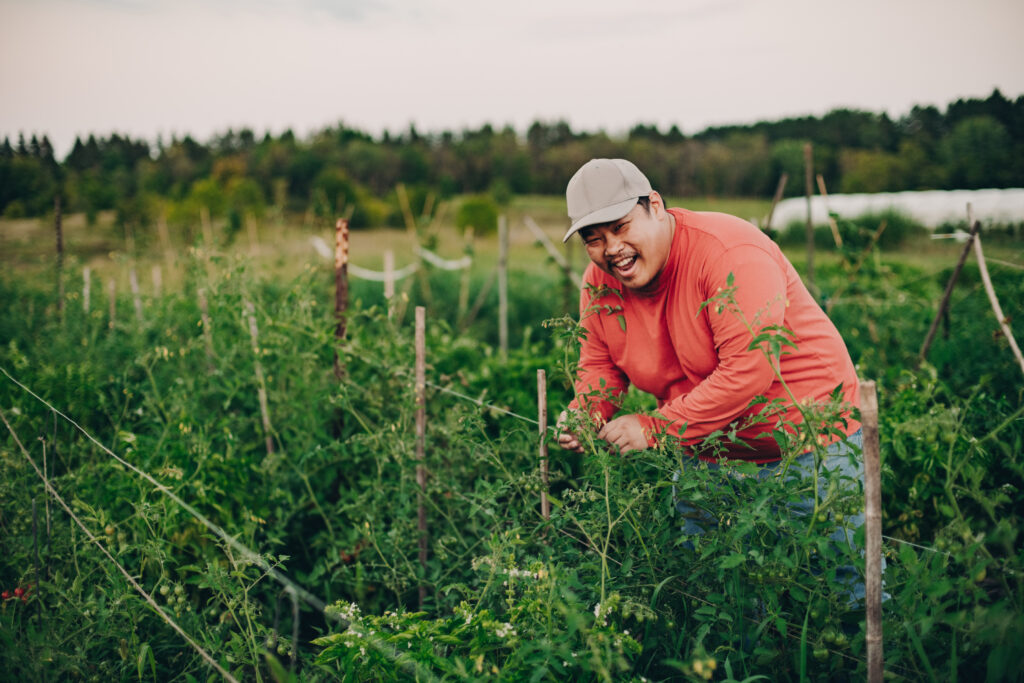
Reflecting on what Earth Day represents, Bao stressed:
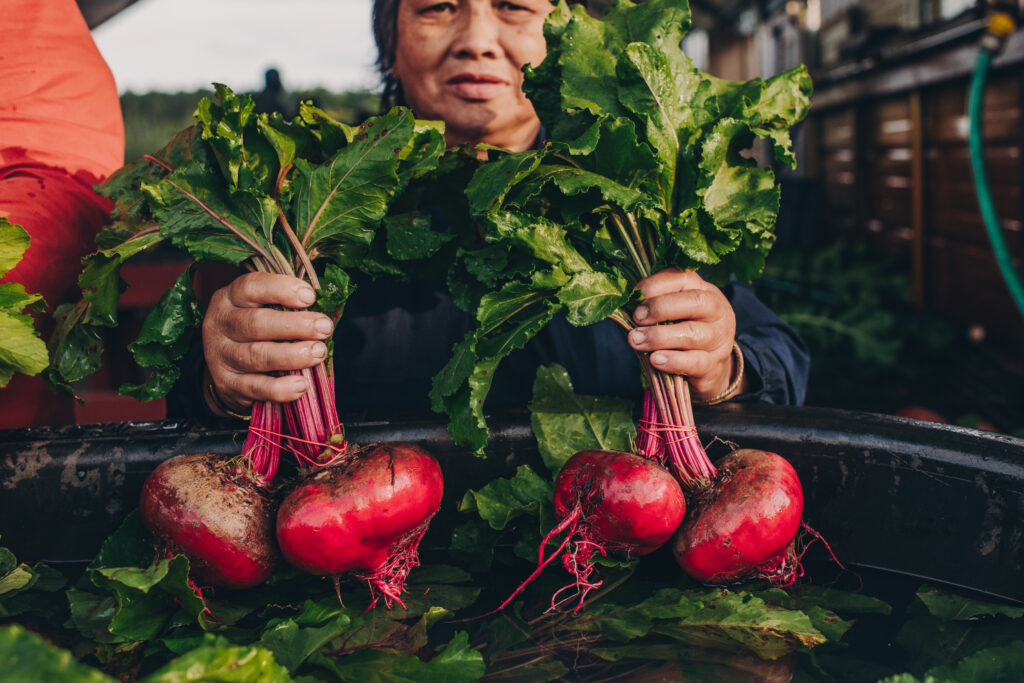
Thinking about Earth Day, Bai cautioned that we will not always see the immediate effect of our actions. There are many distractions in life from social media to current news. He said that people can forget that “the small things we do add up.” He believes that creating our own systems—like composting—can help.
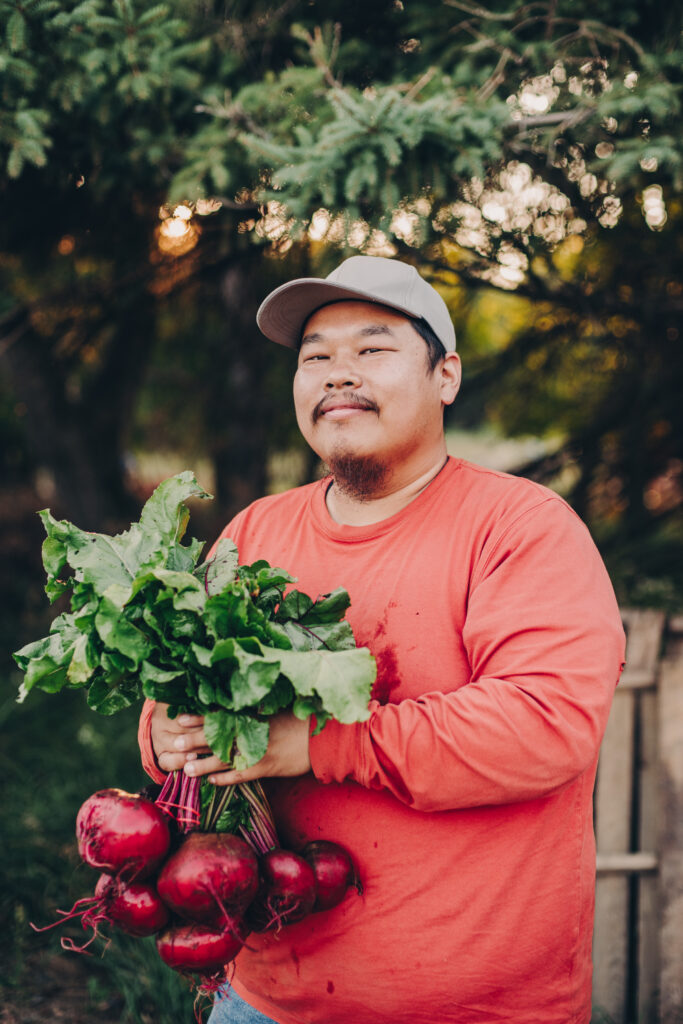
BaoBai’s Harvest is entering their third season farming at Big River Farms—and they envision doing even more. Bai shared that their next grand vision is agritourism. Much like a day trip to an apple orchard, Bai and Bao want to create an immersive space where “people can experience new things, experience new cultures and new people, and try different things.” In the meantime, you can visit them at the Stillwater Farmer’s Market this summer!
The Food Group is proud to partner with farmers like Bao and Bai in building a more sustainable local food system. By increasing land access for emerging farmers and investing in regenerative farming practices, we can build stronger, healthier communities.
From sustainable farming to protecting pollinator habitats to eliminating lawn pesticides, there are countless ways to care for the earth and preserve its resources for future generations. This Earth Day, we invite you to join The Food Group in offering our thanks for the land’s gifts and committing ourselves to wise stewardship of our resources.
More Stories
All NewsExpanding Access to Fresh Food Across Minnesota
Food Shelf Visits Hit All-Time High in 2025
Fear Should Never Be A Barrier to Food: The Food Group and Partners Respond to Operation Metro Surge