
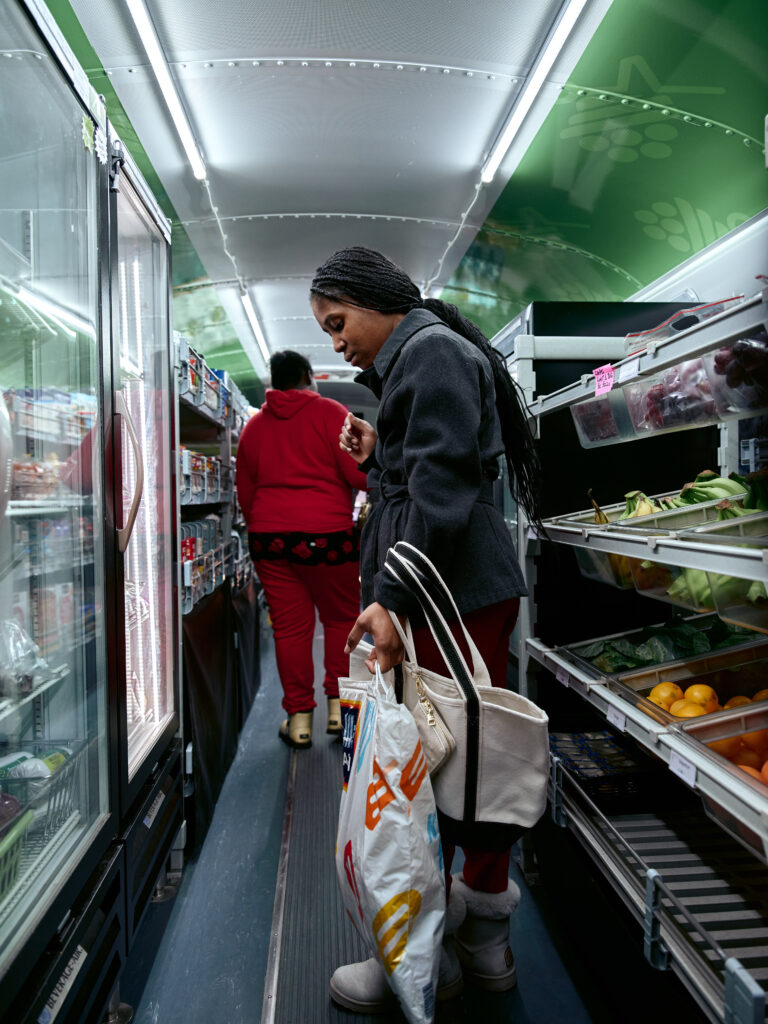
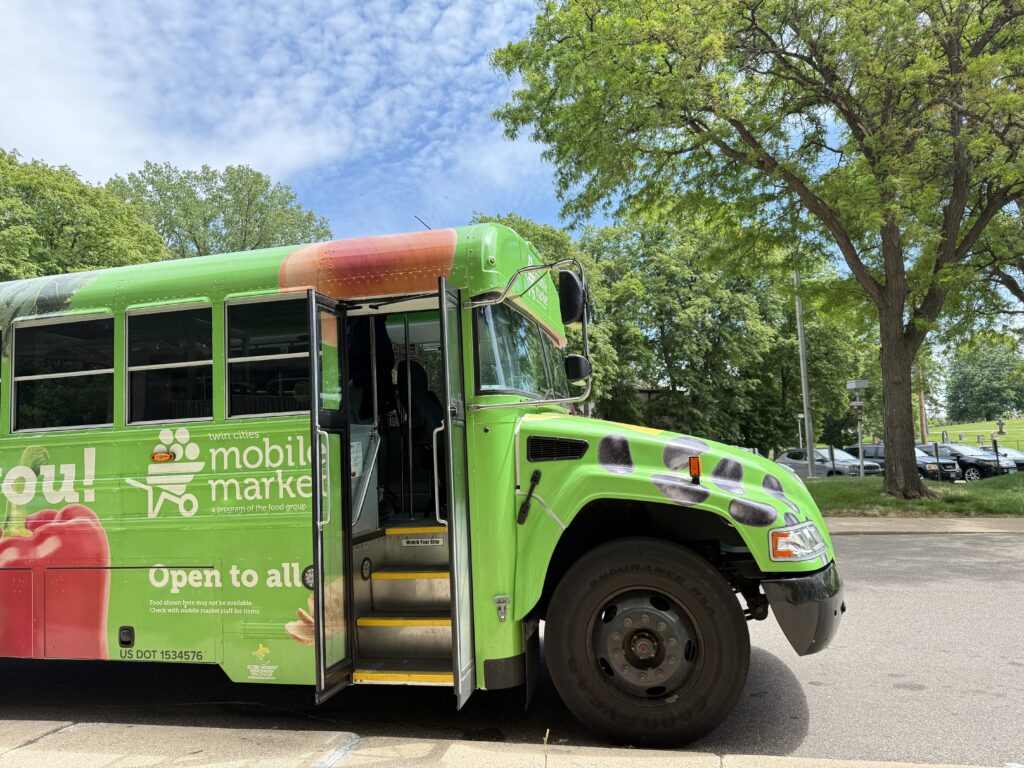
The Food Group is excited to announce the launch of a new Twin Cities Mobile Market (TCMM) stop at the University of Minnesota. TCMM is a grocery store on wheels that stops in 29 urban neighborhoods in Saint Paul and Minneapolis. Through this new campus hub, we’re bringing nutritious, affordable food directly to students’ doorsteps and empowering students who qualify for SNAP to stretch their resources further.
When you’re a college student living on a fixed budget, every dollar represents a hard choice between writing a tuition check and buying groceries or between filling up your tank and buying textbooks. As food and gas prices climb to record highs, more college students are struggling to afford the basics. A University of Minnesota student shared their experience with hunger:
As a student who pays for my own tuition and living expenses, most of my time outside of class is spent working just to cover tuition and rent. Because of that, there were many times when I simply did not have enough money left for food.
University of Minnesota Student
Beyond cost, there’s also the issue of access. Many students don’t live near a grocery store they can afford. They may not have a car or money to pay for the gas to get there.
Hunger on College Campuses
The problem is widespread with roughly 2 in 5 Minnesota college students experiencing food insecurity. The rate is often higher for students of color.
Food is often the most flexible item in a household budget. The 2025 Minnesota Food Shelf Survey found that 72% of visitors reported choosing between food and other expenses. Society often romanticizes the college experience of scraping by or going without, but there’s nothing poetic about going to bed hungry.
Nutrition insecurity—not having access to enough nutritious food—affects physical and mental health and lifelong achievement outcomes. Food fuels our brains and improves reading comprehension, priming us to think critically and learn. Across dozens of studies, food insecurity is consistently linked to poorer academic performance and lower GPAs. One study found that students who experienced food insecurity during college had 43% lower odds of graduating than food-secure peers.
Hunger is not easy to talk about when you’re experiencing it. Shame often keeps people from asking for help or sharing their experience.
There were days when I went to bed hungry. A few times, when I was extremely hungry, I even picked up leftover fried food that someone had just thrown away. It is difficult to admit, but it was the reality of trying to survive while staying in school.
University of Minnesota Student
Partnering to Fight Campus Hunger
Campus food shelves like Boynton Health’s Nutritious U Food Pantry help to reduce stigma on campus and fill the gap for students who need food support. The Food Group is honored to partner with Boynton to supply nutritious, culturally connected food to local students. Now we’re excited to expand the partnership with even more resources for students who are struggling.
Boynton Health Promotion Specialist Karin Onarheim shared how Boynton and The Food Group’s partnership has developed over the years.
The Food Group was one of our main partners [at Nutritious U] since we started in 2017 and where we purchased most of our food for a pantry. As we got to know the agency better, we found other ways to partner and connect whether it be through learning about recent food policy or learning about how a mobile market could serve a specific need supporting students who have the funds to purchase some items or who have SNAP dollars.
Karin Onarheim, Boynton Health
Both food shelves and affordable grocery programs are essential for fighting hunger and ensuring people get the food they need. The Food Group’s Twin Cities Mobile Market is an answer to both cost and transportation barriers for students. Associate Director of Programs Stephanie Wagner oversees The Food Group’s affordable grocery programs.
Bringing the Twin Cities Mobile Market to the University of Minnesota is important because many people on and around campus face barriers to accessing affordable, nutritious groceries.
Stephanie Wagner, The Food Group
Different Resources for Different Students
College students have diverse backgrounds, experiences, and needs. “The average college student is really not a real thing because there’s so many different types of students,” emphasized Karin.
There’s a stereotypical image of a college student as a young person just out of high school. People often assume a student has no spouse, parents, or children to care for. But many college students have families or choose to enter college later in life. All students deserve access to nutritious and culturally connected grocery options.
TCMM helps address that gap by bringing convenient, affordable food directly to campus, helping reduce transportation and cost barriers while increasing access to fresh, nutritious food for students, staff, and community members.
Stephanie Wagner, The Food Group
Reaching Students on SNAP
The new market stop will be the only grocery spot on campus that accepts SNAP. Karin believes that TCMM will give students more options:
A mobile market can help our students who are accessing other resources like SNAP that provide the actual money to afford more quality and more quantity of groceries.
Karin Onarheim, Boynton Health
Empowering Students to Focus on What Matters
Hunger makes it hard to plan for the next week, yet college is all about building for the future. Knowing you can depend on your next meal—and the one after that—frees up mental space to think, study, and dream of who you can be. A student shared what it meant for them to have a reliable source of food.
Being able to access groceries and basic supplies without shame made me feel like I could breathe again.
University of Minnesota Student
For students on a fixed budget, the margin to purchase groceries is razor thin. Students must stretch their dollars to pay for tuition, housing, textbooks, and educational materials, often leaving them with less to spend on food.
Everyone deserves access to nutritious food where they live, that they can get to. The Food Group is honored to work with Boynton Health and other partners to expand grocery options for college students, so they can focus their energy on what really matters.
We’re really grateful to have not only support to source food to stretch our dollar and get those groceries for students who can’t afford it but also have the partnership with mobile market and other teams to really kind of address food insecurity in a nuanced way.
Karin Onarheim, Boynton Health
You must be logged in to post a comment.